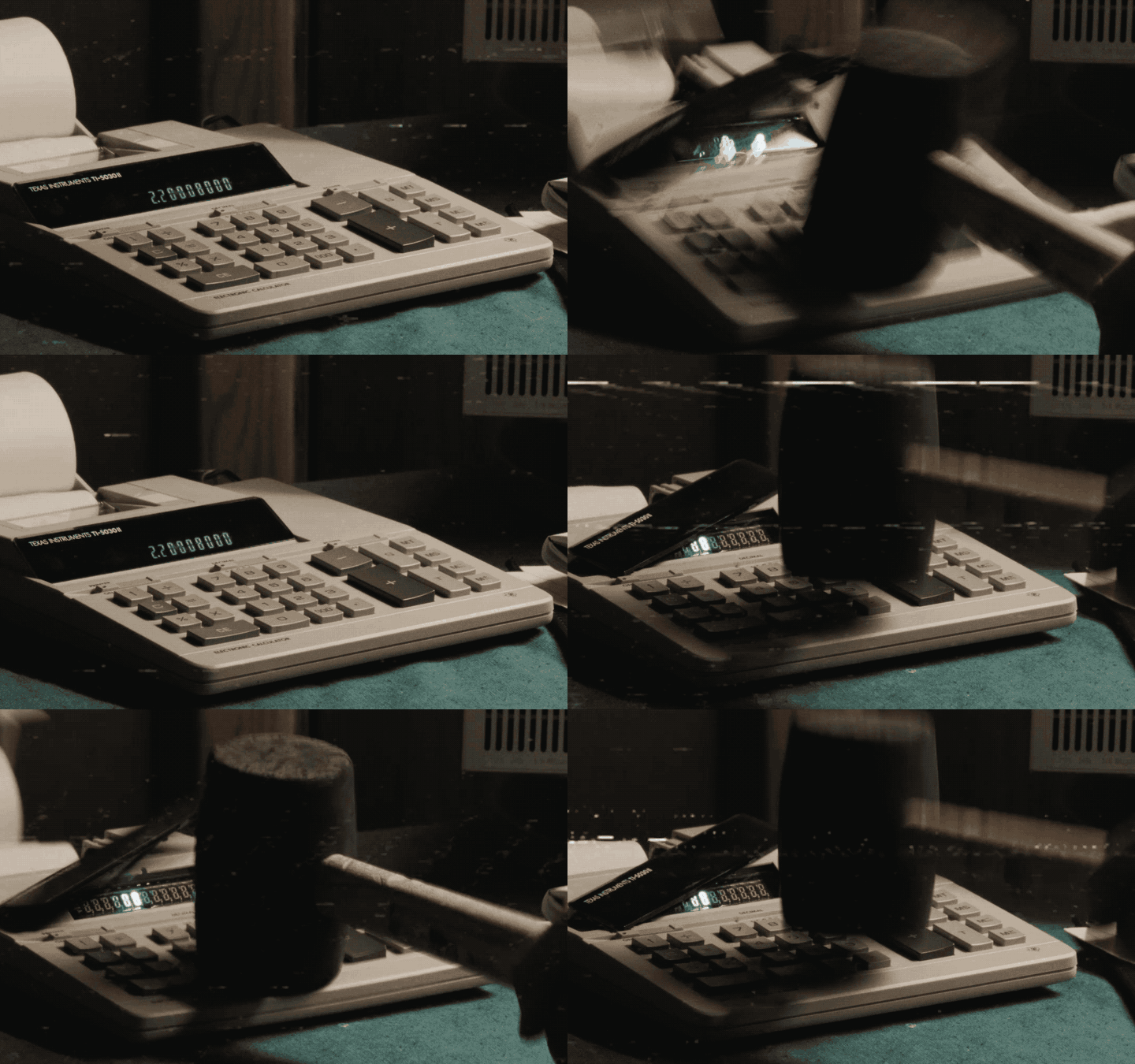
It's not just one flat tire. It's the digital equivalent of all four blowing out at once.
In January 2017, Smoke Cartel moved into a warehouse six times the size of the one we'd outgrown. Within the same few weeks:
- Our new ethernet installation missed its deadline, so we lost internet for days on top of the move itself.
- We lost a significant number of staff to turnover, without warning, right when we needed everyone.
- A site redesign triggered an error that quietly stopped every outgoing email, order confirmations and internal alerts included, for two weeks before anyone caught it.
Our chargebacks went through the roof for about two months. Our email backlog ballooned past 800 messages. "We issued a lot of refunds," I told a reporter afterward. "A lot of refunds. I'm not going to give you a number because it would make me a little sick."
The building was bad. I was the bigger problem.
I'd moved the team into that building believing it would be ready and that every contract behind it would come together the way it was written. It didn't. One bathroom was so bad the team named it the "murder bathroom," and one day I walked in to find someone had taped a body outline on the floor. (I eventually redid that floor myself, put in a new sink and a hand dryer, and repainted. It never looked amazing, but they did stop calling it that.)
But the real reason I didn't see the collapse coming was me. I was on site nearly every day for two months, working with construction crews and overseeing the electrical and internet, because I'd decided it needed my own eyes. That meant I'd left tech, customer service, and marketing to run themselves at exactly the moment they needed the opposite.
My team did what I'd trained them to do. They tried to self-solve. But problems were breaking across so many departments at once that no amount of self-solving was enough. They needed someone connecting the dots across teams, and I was the one person positioned to do that. I just wasn't there.
I worked seven days a week for most of the next seven months. I spent that Christmas at the warehouse.
The data said it wasn't effort. It was hours.
My co-founder and I had prided ourselves on a system we'd built ourselves. That's what made the collapse so disorienting: the system that had always worked stopped being enough, no matter how hard we leaned on it.
When we finally dug into the data my co-founder's team had been quietly building, the pattern was obvious. Most customer inquiries were landing when nobody at Smoke Cartel was awake. We were asleep during the hours our customers were shopping.
The fix wasn't a heroic push
It was 24/7 live chat, built by integrating a messaging platform directly into our existing systems, so agents could see a customer's order status, shipping timeline, and conversation history in one place instead of hunting across four tabs.
"We realized we needed better integration and visibility of all our systems so our team could work from anywhere," I said at the time. "Be it on their cell phone in Japan, or at 3 a.m. on the road, they needed all the data and tools at their fingertips to solve for the customer."
Within a couple of months:
- Average response time dropped 93%, from two days to one hour.
- 30% of inquiries were resolved in under fifteen minutes.
- Customer satisfaction rose 11%, while inquiry volume grew 58%.
- We closed the year up more than $1M in revenue over the year before.
Those numbers aren't just my memory. An outside case study checked the math.
The lesson: the org chart was the problem, not the people
It wasn't the first time the team had quietly drowned, either. A year or two earlier, our happiness rating had slid from the 90s into the 60s and 70s, and first-response time stretched from two hours to two days, with no single day you could blame. That collapse came from three people stretched across too many channels for too long.
Both times, the uncomfortable first step was the same: admitting the structure, not the people, was the actual problem.

If you're about to move, launch, or rebuild
- Don't stack big changes. A move, a redesign, and a hiring push in the same month is three crises waiting to overlap.
- Name someone to connect the dots. If you're heads-down on the project, someone else has to watch every department at once.
- Test your emails after any site change. Place a real order and check every notification.
- Look at your inquiries by hour. You might be asleep when your customers are shopping.
- When things slide, check the structure first. Before you blame effort, ask whether the org chart can hold the volume.
Follow me on Instagram: @darbycox
Going through your own version of this? Book a call with me.